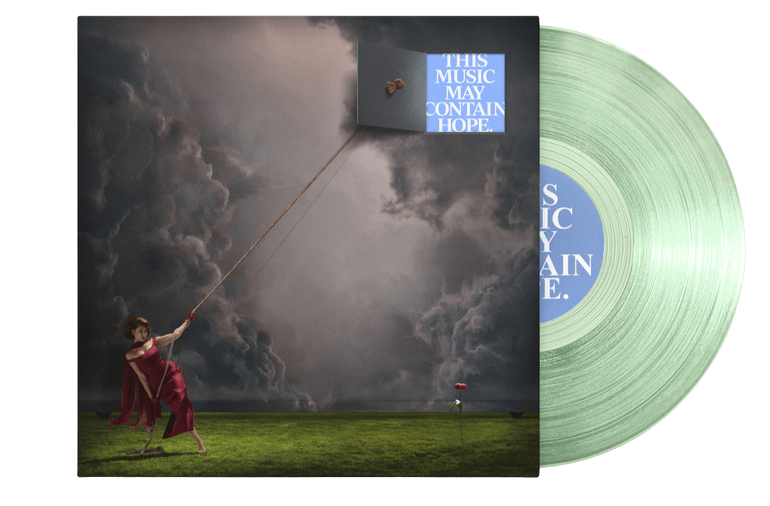
The very talented RAYE has released her second studio album THIS MUSIC MAY CONTAIN HOPE, and we are here to unpack it. RAYE has gifted us a project that feels like a Broadway play or a movie, walking us through stories of herself and everyday people while highlighting common themes of heartbreak in different forms. She captures the motions and nostalgia of life, and all the little things that remind us of pain and depression. Despite all of this, the message is repeated over and over again that we have to believe happiness and hope are around the corner. We have to believe this to keep going, because without it there is no real source of joy. Without joy and hope, we fall into dark places that are hard to climb out of, and RAYE keeps bringing us back to that idea. Read along to dive deeper into it all.
Intro: The Girl Under The Grey Cloud.
The introduction to THIS MUSIC MAY CONTAIN HOPE begins with a short voice memo from RAYE herself, setting the tone for the album as she describes a woman in Paris during a storm. We’re placed in the perspective of a woman in her late twenties who is lonely, drunk, and craving attention, feeling completely unfulfilled. A soft, sad orchestral moment plays underneath as her misfortunes are laid out, from overthinking a mean comment from a man to getting a call from her grandma reminding her it’s time to pray. The scene takes place in November, and it all feels heavy and isolating before the audio flows straight into the next track.
I Will Overcome.
This track opens with the woman letting out a nervous cry of encouragement to herself, repeating “I’ll overcome,” while surrounding voices reassure her that yes, she will. RAYE’s more confident voice comes in with vivid imagery of her stumbling home drunk in heels, hating herself as her past persona lingers in her mind. She compares the moonlight to a spotlight, really pushing the idea that she’s the main character, calling herself a chic mess while referencing stars like Amy that people compare her to, alongside the words that continue to hurt her. The chorus falls back into that sad, almost fragile tone of “I’ll overcome,” before shifting again into confidence in the second verse, where she touches on insecurities that come from scrolling on social media. The final verse brings us back to the original image of the drunk woman with a dead phone, reminding us that underneath it all she’s insecure and alone, but also aware that people crave entertainment and a good story. She leaves us with the line “Aren’t we all broken people, just perfect how to hide it?” setting up the idea that this album is about making a mess look graceful and chic, before one last chorus drives home the message that she will overcome, always.
Beware.. The South London Lover Boy.
This one opens with a howl and an immediate warning about a boy emerging from South London, described as a “strange creature.” A punchy intro sets this almost Kim Possible type vibe, framing him as a scummy guy turned into something we should genuinely fear and stay away from. The track lays out all the ways he pulls women in, emphasizing how attractive and hard to resist he is, even as he admits he’s “too toxic for you, darling,” while “beware” repeats over and over. The bouncy, almost playful chorus reinforces the warning, but the second verse digs deeper, taking shots at him and telling us not to “antagonize” him or “offend its fragile ego.” Calling him “it” more and more turns him into this full-on monster, while also reminding us he’ll just use women for a place to sleep. The bridge shifts into something more soulful with snaps and a slower, almost chant-like instruction to repeat after RAYE about staying safe, before it builds faster and more chaotic, drilling the message into our heads and making sure nobody goes near this guy.
The WhatsApp Shakespeare.
The story gets down and almost biblical, opening with a high octave grand piano as RAYE tells the story of Adam and Eve while blending it with a very modern situation where a man clearly cannot be trusted. She cleverly mixes old and new, using lines like “wolf in sheep’s clothes, oh, but in this case denim,” layering metaphors with hints of her mother’s disapproval to show just how wrong this man was for her. She describes how he enticed her and how attractive he was, even comparing it to “killing her,” while constantly referencing WhatsApp and dropping phrases like “Wherefore art thou” to fully lean into the Shakespearean angle and show how calculated his manipulation was. She positions herself as “Juliet,” practically begging herself to run from him, while very clearly exposing him as a cheater. She doesn’t sugarcoat it at all, especially with “Though I’d love to clarify, no one died in the story / But I did inside when I found out I was one of seven other leading ladies,” calling him out in a song she knows is going to blow up. The outro ties it all together with a dramatic, almost fairytale-like “dun dun dun,” sealing his character as the villain.
Winter Woman.
“Winter Woman” paints another heartbroken picture. She is hurting, and the echoes in the production make it feel like she’s overthinking and replaying everything over and over in her mind. The line “He wrapped his arms I’d die to live inside around her perfect little tiny waist” immediately tells us he cheated, bringing out the jealousy, resentment, and even the desire to be her. She wants to hold onto her dignity and walk away with pride so she can fall apart in private. The chorus feels like a string of racing thoughts about how she’s going to get through this and come out on top, deciding she’ll become cold and emotionless, wearing black and keeping to herself, essentially creating this “Winter Woman” persona. The cold becomes a metaphor, something she’ll carry even in July, as she swears to stay alone, stay strong, and ignore his apologies or messages. She believes she’ll come out stronger, even if she turns to alcohol along the way, trying to rebrand herself into someone he’ll regret losing. The line “she vows an oath to make her name a word you won’t forget” says everything, while the shifting tones and vocal effects mirror the layers of her thoughts, moving between heartbreak and redemption. As she repeats the more confident lines like “I will be sad and beautiful,” her voice becomes clearer, reinforcing the idea that life goes on and that she will be okay.
Click Clack Symphony.
This one builds its tempo around the sound of heels hitting the ground, immediately paired with a confident statement from RAYE that she’s already won simply by being born. That confidence drops quickly though, as she admits she can’t even stand the thought of leaving the house, but realizes she’s out of alcohol and her creativity isn’t flowing, so she calls her friends to go out. The “click clack symphony” becomes a genius metaphor for putting on heels and stepping into a persona that inspires her again, the rhythm of them hyping her up and feeding her confidence. She even congratulates herself, saying “The way I fake this smile could pay the mortgage and the rent,” showing that even if she doesn’t feel it internally, she knows how to perform confidence on the outside. She gives a quick nod to her friend Carly for pulling her out of this “Friday Night Depression,” as the repetition of what will make her feel better echoes throughout the track, eventually turning into an alarm-like push to get her out the house. The bridge shifts into RAYE speaking a sort of thank-you note, and even though she ends the night back home and sad again, she’s still grateful she went out. She starts to see a light at the end of the tunnel, repeating “it’s going to be alright,” before reminding herself she needs to let go and be there for herself, not rely on a man. Lines like “The cold never lasts, my darling / It just teaches the heart how to burn” tie it all together, with the dramatic orchestra signaling her slowly finding herself again after the relationship, the depression, and the betrayal, ending with the feeling of a breeze finally blowing it all away.
I Know You’re Hurting.
“I Know You’re Hurting” feels like RAYE stepping outside of herself and looking in from an outside perspective. The music builds slowly, revealing all the pain sitting underneath her fake smile and composed exterior. That perspective bursts into the chorus, chanting “I know you’re hurting / And deep down, there’s something burning,” almost like a voice trying to reach her and break through. It encourages her to keep believing, insisting that something good will come, while also pushing her to be kinder to herself, to stop insisting on being strong all the time, and to actually let others help. Lines like “if you need two more arms to hold these burdens, I’m here” feel especially comforting, like something you need to hear when you’re at your lowest. She begs herself not to lose faith, repeating that the Lord is working on her, and the bridge explodes with horns, faith, and encouragement, pulling the listener into that feeling. Then everything strips back to an isolated vocal telling her not to give up on life, before the horns and uplifting sounds return for the outro, creating this feeling of rising out of a slump and slowly ascending into something lighter.
Life Boat.
The track opens with a voice memo that sounds like parental figures, a mother and a father, encouraging RAYE not to give up and not to work herself too hard. She responds with a harmonized confirmation that she won’t, which leads into a montage of different voices, people of all ages agreeing not to give up, layered over the steady beat of a heart. The verse dives into the feeling of trying not to drown in depression, holding on even when it feels impossible, while more voices echo that same message of persistence. The production shifts into this almost club-like feel that slowly builds into a sense of ascension, like she’s starting to believe she’ll actually make it through. In the second verse, a male narration comes in, sharing his own experiences with rejection and disappointment, reassuring us that he’s been there and that you will come out the other side with dignity. Even though the lyrics themselves aren’t overly complex, the emotional weight comes from how many different people and perspectives are backing this idea of not giving up, which makes the message feel powerful and universal.
I Hate The Way I Look Today.
Silly and simple, with RAYE chanting out her frustration with her appearance in a way that feels instantly relatable, especially for those random moments where you wake up and just feel off about how you look. She’s aware that she’s being unkind to herself, but that doesn’t stop the feeling, perfectly capturing self-deprecation and body dysmorphia through a fast-paced, jazzy, almost playful sound. The Motown-style storytelling helps deliver a very specific and straightforward message, making something heavy feel light on the surface. By the end, she starts to shift, agreeing to at least try to build herself back up, pushing the idea of ignoring the negative thoughts and choosing confidence instead. The vocal runs and belting turn what could be a purely depressing message into something oddly fun and uplifting.
Goodbye Henry.
“Goodbye Henry.” opens with RAYE telling us we’re about to hear a sad little story, but for once, it’s about a man who actually did nothing wrong. She finally speaks kindly about someone, admitting that they just weren’t right for each other and that the love or spark wasn’t really there. The only fault she lightly points out is that he could “drink a little less,” but overall, he’s not the problem. She reflects on having “high hopes” for them and even says that in another life they might have worked, but she never fully explains what actually went wrong, which makes it feel even more distant. There’s this idea that maybe they could try again someday, but the tone makes it clear they won’t ever see each other again. Al Green comes in during the bridge, offering reassurance to keep your head up and reminding us he’s experienced heartbreak too. By the end, it feels like RAYE is more in love with the idea of Henry than the reality, and while there’s some lingering emotion, she’s ultimately at peace with him being gone, and that’s okay.
Nightingale Lane.
The song is introduced as the story of “the greatest heartbreak I’ve ever known,” taking us back to her first love in London. She reminisces on the moment this boy kissed her, describing the feeling of his lips and how deeply it affected her, something she still thinks about on her way home, especially during moments when her life feels boring or lacking love. That memory becomes a source of reassurance, reminding her that a love that is passionate exists and that she’ll find it again someday. It’s what keeps her believing in love in the first place. In the second verse, she grounds herself back in reality, acknowledging that even though the love was intense, they weren’t right for each other. The locations tied to that relationship bring back waves of nostalgia every time, and those feelings rush in all over again. The bridge reinforces her tougher exterior, showing how she puts on a brave face and stays strong, trusting that the right person will come along. By the outro, her voice completely takes over, filled with emotion and passion, belting with full conviction, making it clear that she truly believes in what she’s saying.
Skin & Bones.
This one opens with a refrain centered around the insult of dealing with a man who is only interested in sex. RAYE takes us through the feeling of being picked up by someone who has no real desire to know her beyond the surface, begging for somebody to show her a decent man with actual chivalry, something she feels barely exists anymore. She’s exhausted by men who refuse to take the time to understand her or have real conversations with her, describing the frustration of putting effort into looking nice just for a man to rush through the date because “all he want is that / skin and bones.” He has no interest in her mind or the things that actually make her who she is. Throughout the verses, her bitterness towards men becomes obvious, shaped by the ways she’s been disregarded and undervalued over and over again. She describes these experiences as men trying to “get away with” not loving her, while comparing the dating scene to the “wild wild wild wild west,” framing these men as reckless, animalistic, and emotionally outdated.
WHERE IS MY HUSBAND!
“WHERE IS MY HUSBAND!” opens with a drum roll and what feels like a full on stage musical number, immediately setting a dramatic and almost theatrical tone. The concept is simple but loud. She is begging, crying out, asking where the hell this man is, like her future husband is somehow hiding from her. It feels like a test she just has to wait out, because she knows he’s out there somewhere. The verses run through different excuses for why he hasn’t shown up yet, mostly centered around the idea that he’s getting himself together and becoming his best self before meeting her. At the same time, she almost feels like she’s auctioning herself off, calling out into the world and telling everyone to let this man know she’s waiting. The repetition of her questioning where he is builds the desperation, until the end when a voice recording from her grandmother comes in and reassures her, “Your husband is coming,” followed by applause that makes it feel like this long-awaited moment is finally being promised.
Fields.
“Fields” is a really special moment on the album, with RAYE addressing the song to her grandad and even featuring him in harmony with her. It opens with a voicemail where she apologizes, feeling guilty for not spending as much time with him anymore, but now she’s coming back to him for advice and comfort. She’s tired and longing to feel free the way she did when she was younger, before the weight of adulthood set in, craving simple things like hearing him play piano and feeling like a kid again. He chimes in throughout with what feels like gentle, reassuring support, before we hear a voicemail from him in return, saying he always thinks of her and that loneliness can follow you no matter where you are. Once that ends, RAYE expands on his story, acknowledging him as a musician and promising to carry on his creativity. As the song builds, her voice erupts almost like a prayer with a choir behind her, expressing how badly she wants to be free from the pain she’s carrying. The message lands clearly that music is medicine, that singing and expressing yourself is a way to release everything, and that no matter how low she feels, she will always matter to him.
Joy.
Shifting the tone immediately, opening with bongos and the repeated question “Mr. Ray, are you somebody?” before RAYE comes in with a clear declaration that sadness, depression, and pain are no longer welcome in her life. She’s letting it all go, asking the Lord to protect her and bring her joy in the morning after the rough nights. The claps and chanting of “joy” make it impossible not to move, giving off the energy of a Sunday church choir and turning the message into something you can physically feel. She demands joy, not just for herself but for everyone, even bringing in a young voice, her sister, to echo the idea, showing that this belief carries across generations. She acknowledges the pain but leans into faith, trusting that prayer will carry her through, repeating that “the light comes with the morning.” The song builds into a big, passionate chorus that feels interactive, almost like it’s telling you to clap along and shake it off, making it clear that she’s choosing joy, and that staying stuck in pain is no longer an option.
Happier Times Ahead.
Opening by introducing multiple stories from different perspectives, starting with a curious girl who is, unsurprisingly, sad and heartbroken over lost love. The band comes in as we shift to a man who is clearly depressed but hides it behind a happy face for his friends, looking forward to a drink at the bar as his escape. RAYE uses these characters to show that even when life feels heavy, there’s still this push to believe that something better is coming. The next verse brings in “sad Auntie Jean,” a widow who feels completely alone and misunderstood after losing her husband. Each story feels grounded in real, everyday pain, but the chorus keeps bursting through with the same message that even though life is hard, happiness has to come back around. The breakdown reinforces this idea, repeating that she doesn’t know “how or when,” but that “there must be happier times ahead.” The jazzy production transforms all of this sadness into something almost comforting, turning these struggles into a performance that still carries hope that things will eventually be okay.
Fin.
Breaking the fourth wall as RAYE directly congratulates us for making it through all 17 songs, taking a moment to reflect on everything she’s explored across the album. She reinforces the core message that life is precious and that we have to believe in hope, even encouraging listeners that if they don’t feel it yet, they should restart the album and try to find it again. The final four minutes shift into what is literally a verbal thank-you note, where she gives genuine credit to every person who contributed to the project. It feels like the end of a movie, with real emotional weight, as she rolls through her own version of end credits, making sure everyone involved gets their moment of recognition.


Leave a Reply