
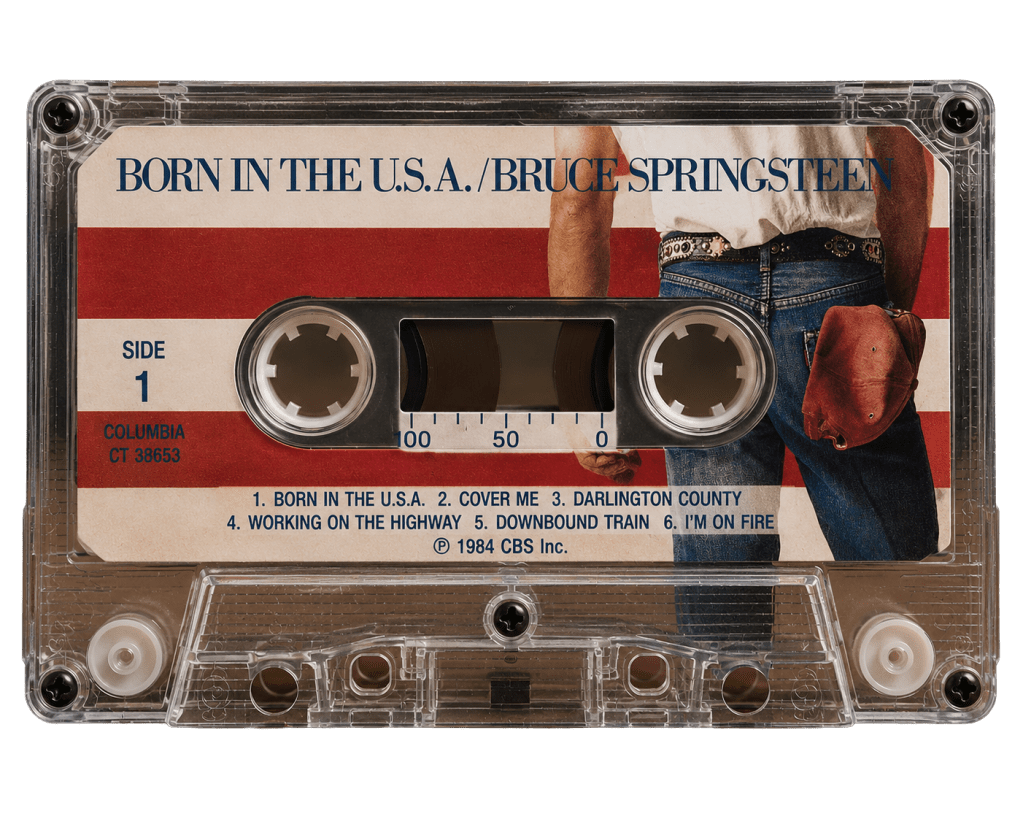
Released: June 4th, 1986
Straight out of my preschool graduation (yes, it was U.S.A.-themed), we’ve got the birthday of a classic. Forty-two years ago today, Bruce Springsteen gave birth to a classic: Born in the U.S.A. Anyone in America could recognize those jeans with the red hat in the back pocket. We are here to unpack the meaning behind it all.
The smack of those snares, the synthesizer riff that we all know so well, and the raspy “Born down in a dead man’s town” create a sense of pride that rushes through. Really though, this pride actually isn’t pride at all. “Born in the U.S.A.” is more of a diss track to America disguised as a prideful anthem. It reveals the perspective of a veteran returning home to a not-so-warm welcome accompanied by chaos and violence. All the while, loud and patriotic music plays in the background as Bruce screams “Born in the U.S.A.” like it’s something positive.
Ending with a drumroll into the rest of the album, a sting of electric guitar and a ready yelp leads us into “Cover Me.” We continue the theme of the cruel world coming to get you. Bruce embraces loyalty and begs for someone to present themselves and protect him.
Hitting that cowbell right into “Darlington County,” we get a real feel for a summer weekend driving down to South Carolina with a buddy looking for a good time. Breaking out into that famous “sha-la-la” chorus, we continue the story. It’s simple and straightforward, describing young, spontaneous fun with strangers.
Crisp clapping and we’re moving onto “Working on the Highway.” Bruce is cosplaying the persona of a highway worker directing traffic and fixing roads. This highway worker takes an interest in a young girl with a protective family, and it seems that this highway work is actually his court-ordered service because he has taken things a step too far. It’s so 80s to be casually singing about something so wrong and making it upbeat and fun. Is the story true? Is the story too controversial? That’s what we are constantly wondering about with these 80s artists. We will probably never know.
Another track passes about the working man and his dedicated girl in “Downbound Train,” and the ups and downs of their relationship. The yearning man takes over the show on track six. “I’m On Fire” takes us through feelings of pettiness and jealousy creeping in. A man is in love with a girl who already has a boyfriend. He wonders if the boyfriend really does it for her and is confident he can do better. The quiet tension of it all makes it even more intense, describing a burning passion in the way he feels for her.
The vibes are brought back up in “No Surrender.” We are back in high school because two lovers made a promise that they would always remember the feeling of being together.
“Bobby Jean” is about losing a longtime friend. A friend that was loyal and true. They understood each other on a different level, and now Bobby is in a faraway place. This song is a tribute and a goodbye to him, closing out with a sax solo that almost feels like it’s calling out and speaking directly to this friend.
“I’m Goin’ Down” is another classic tone-setter on this album. They’re sitting in the car and having their relationship, but this time they are fighting. That initial spark is kind of gone, and he is tired of the arguing routine. He knows something is off between them. He isn’t exciting her anymore, and he feels like she is only happy when tearing him down. Repeating the line “I’m goin’ down, down, down, down” over and over beats it into us that this relationship is failing.
The last three tracks of the album close us out with the classics. “Glory Days” tells a classic, reminiscent story of how much everyone misses the days when they were young. Referencing high school again and tying the whole album together, Bruce fast-forwards us to the present. Men in their late thirties talk about their time in high school and how it all ended up today. It reminds the audience to cherish their youth and try not to dwell too much on the little things.
“Dancing in the Dark” is such a classic about letting loose and letting the body feel and move. Worrying about what’s coming and looking too far within yourself can drive you crazy, so he encourages us to dance it out and move through the darkness with swagger and ease.
Closing out the album with “My Hometown,” we find grace in the conflict that is America. Everything wrong with the world, all the disagreements that took place during the childhood of a young Springsteen, and the feeling of helplessness he felt like so many others. The true and raw description of Freehold, New Jersey gives us such a specific perspective. There is something special to note about this track, though. Its quieter tone feels much more accepting and proactive than the rest of the album. Rather than shouting frustrations into the void, Bruce seems to be reflecting on them and looking for a way forward. The motions we go through, where Bruce passes the same sentiments down to a son of his own, bring the whole thing full circle. Through all the hardships of the world, he teaches us that we must claim this town as our own and help create change.
This monumental album still rings out in the streets of Asbury Park today and seems to come alive specifically in the summer. These New Jersey spots are crawling with Bruce in their veins, and they are proud.


Leave a Reply